
 Warning images are graphic!
Burned Bone Gallery
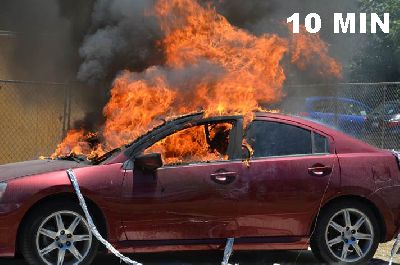
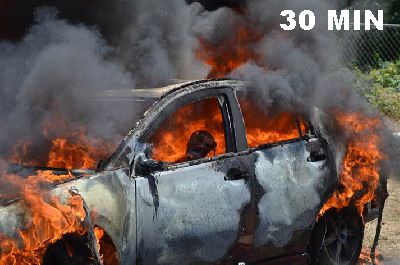
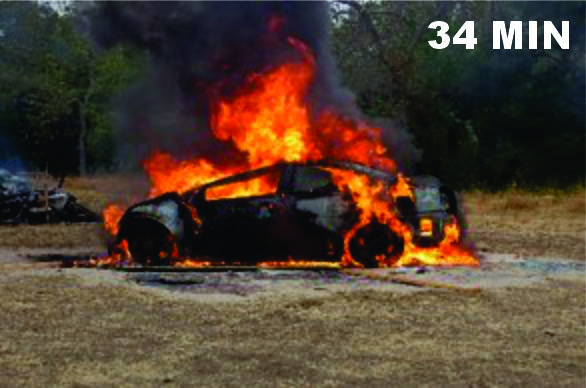
After a devastating fire, when the body is considered “burned beyond recognition,” it can still retain valuable information about personal identification, patterned burn damage, and in some cases, evidence of preexisting trauma. Dr. Pope specializes in the analysis of burned human remains from structural, vehicle, confined-space, and outdoor fire scenes.
Each fire environment is unique and produces specialized burn patterns. Dr. Pope has researched burned human remains for over 20 years and has collected data from the annual Fatal Fire Death Investigation Course in San Luis Obispo, California since 2008. The course provides realistic fatal fire scene scenarios involving burned human remains (www.slofist.org).
Data from more than 170 bodies includes time, temperatures, photographic images, and the resulting condition of the body. Burn patterns are affected by duration, fuels involved, fire environment, body orientation to heat sources, and suppression techniques.

Just as each case is unique, so are the burn patterns produced during the continuum of heat-related changes to the human body. These patterns can tell a story about duration, temperature ranges, fuels involved, fire environment, and tissue changes.
After the fire, burn patterns in soft and skeletal tissues survive as physical evidence that can help explain how the body burned.
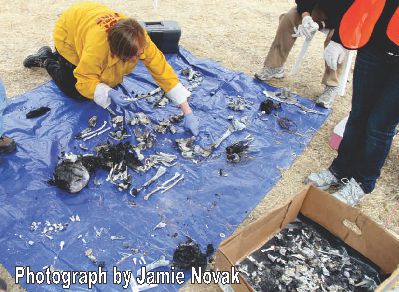
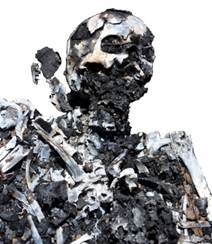
Above are examples of burned and fragmentary remains from a vehicle fire that lasted for hours, leaving burned bone as evidence of the body.
Left photograph by Jamie Novak.